Three scientific pillars. One unified ecosystem.

KORAX is built on neuroscience, motivational psychology, and algorithmic governance.

Designed for human biology

KORAX isn't built on technology trends — it's founded on decades of neuroscientific research. From Hermann Ebbinghaus (1885) and the Forgetting Curve, to Allan Paivio (1971) and the Dual Coding Theory, to Giacomo Rizzolatti (1996) and mirror neurons.

Every component of the platform is designed around how the human brain learns, memorizes, and retrieves information — not around how IT systems archive documents.
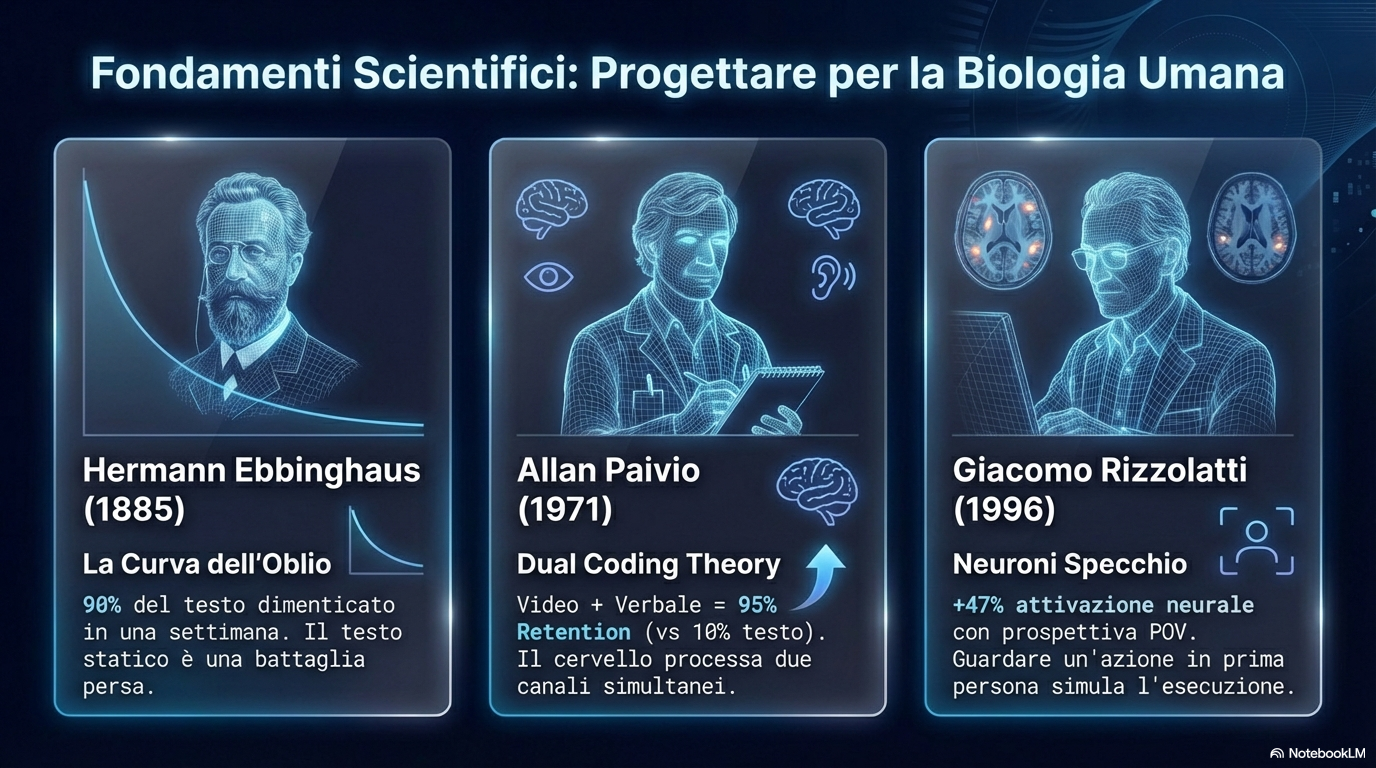
Scientific Foundations: Ebbinghaus, Paivio, Rizzolatti
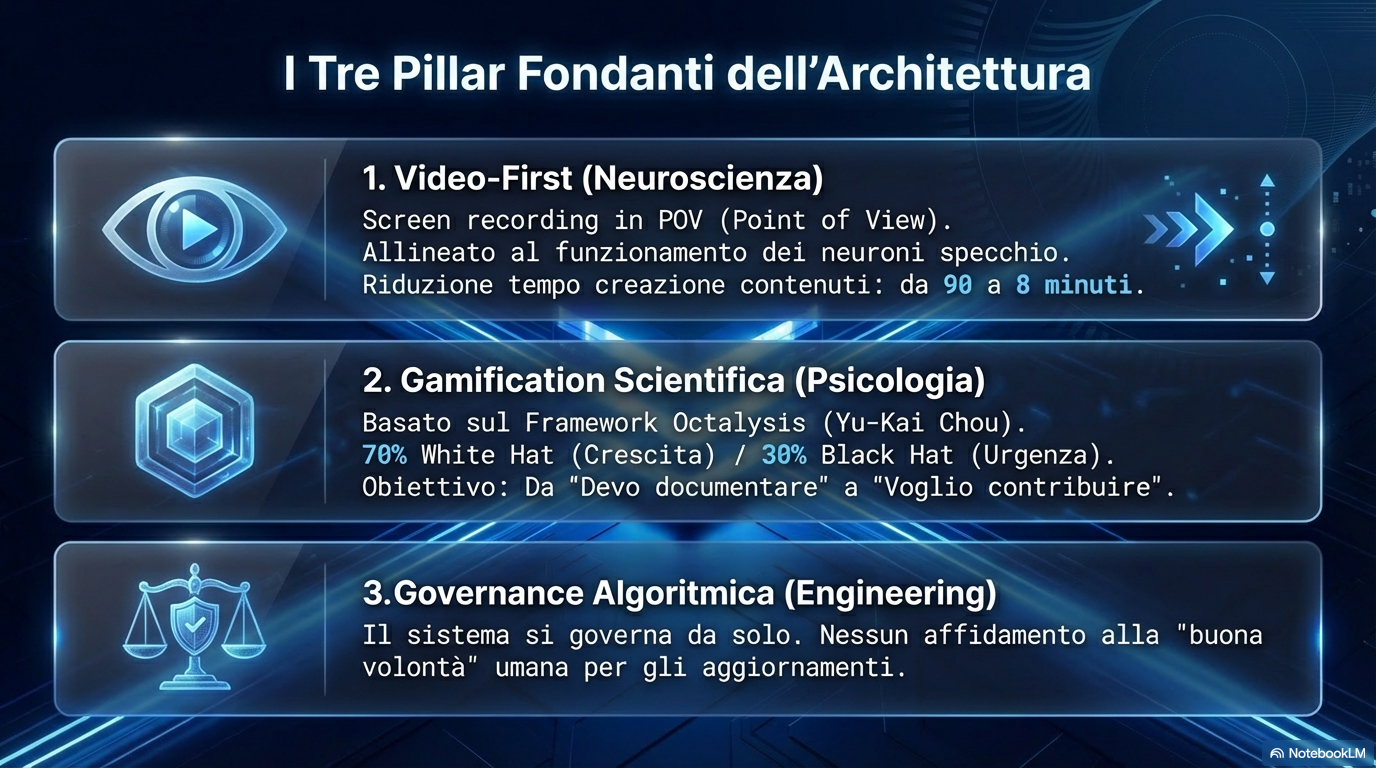
The Three Foundational Pillars of KORAX Architecture
Dual Coding Theory (Paivio, 1971) + Mirror Neurons (Rizzolatti, 1996)

Video-First

First-person screen recording — activates mirror neurons with +47% neural activation. Knowledge is transmitted the way it's done, not the way it's written.

The KB isn't a PDF archive — it's a visual asset built around how the human brain learns.

95%video retention vs 10% text after 72h
Octalysis Framework (Yu-kai Chou) — 8 Core Drives

Gamification

The knowledge economy engine: transforms "I have to document" into "I want to contribute." 70% White Hat / 30% Black Hat balance for sustainable engagement.

Skill badges shareable on LinkedIn, quarterly leaderboards, weekly challenges.

8Core Drives activated for intrinsic motivation
KGM — Knowledge Governance Module

Algorithmic Governance

Traditional KBs decay because nobody governs them after publication. KORAX governs them by design.

Quality Gate, continuous monitoring, automatic gap filling, periodic audits, document graph.

24/7quality monitoring and content updates

Explore the platform

Contact Us Request a Demo